What Is BIM and Why Is It Transforming Real Estate Sales?
BIM, 3D and visual workflows that make complex projects easier to understand.
What Is BIM and Why Is It Transforming Real Estate Sales?
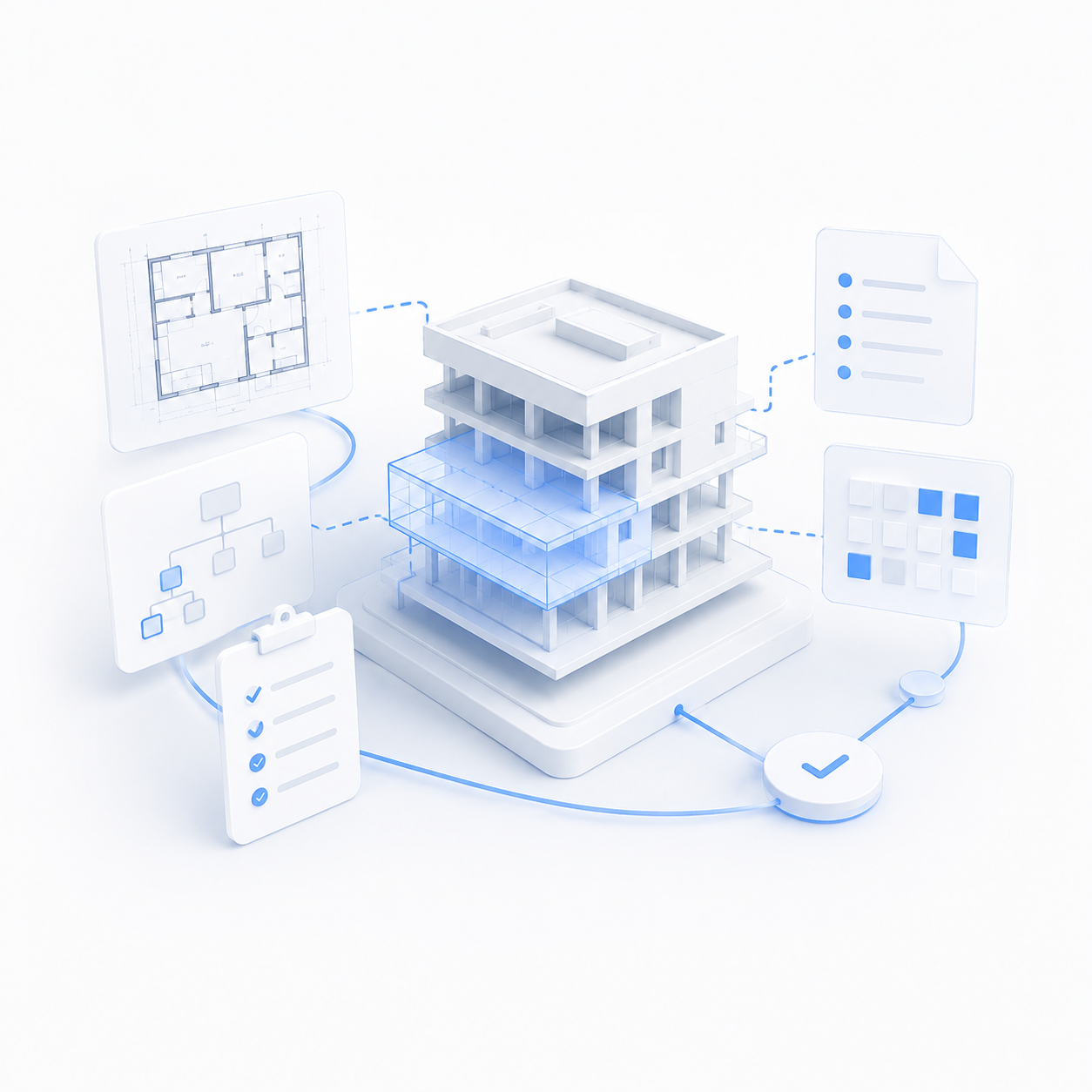
First article in the Benatrix blog series | Reading time: 6 minutes For decades, selling off-plan apartments relied on printed floor plans, stylized renderings, and scale models in showrooms. Buyers were asked to invest hundreds of thousands or millions of dollars based on a mental picture of something that did not yet exist. The gap between what was shown and what was actually delivered has been, and still is, the largest obstacle in modern real estate sales, especially for international buyers who cannot visit the site in person. Building Information Modeling (BIM) is the technological shift that closes this gap. In this article, we explain what BIM is, how it differs from traditional drafting, and why it is fundamentally rewriting the rules of how real estate is sold. What Is BIM, Simply Put? BIM is not just a 3D drawing program. It is an entire working methodology that turns a building into a smart database. Every wall, door, window, or pipe in the building is not merely a line on paper, but a digital object carrying data: its material, dimensions, cost, manufacturer, expected installation date, and maintenance requirements. The difference between a traditional CAD drawing and a BIM model is like the difference between a photograph of a car and the car itself. The first shows form; the second carries an engine, data, and the ability to function. Why BIM Is Changing How Real Estate Is Sold 1. Full Transparency for the Buyer When the entire building is captured in a precise digital model, the buyer can see their apartment in full detail before purchase: the actual area, ceiling heights, window orientation to the sun, even the view from the specific floor. No surprises at handover. 2. Dynamic Pricing and Customization Because the model knows the cost of every element, buyers can change finishing materials (tiles, marble, natural wood, hardwood flooring) and see the impact on the final price in real time. This transforms the buying process from traditional negotiations into a transparent, interactive experience. 3. Remote Sales to International Investors A Saudi investor interested in a Dubai apartment, or a German buyer considering property in Istanbul, no longer needs to travel. A web-based BIM model lets them walk through the apartment virtually, measure distances, and examine all details from their office desk. This dramatically expands the pool of potential buyers globally. 4. Marketing Efficiency for Developers Traditionally, producing marketing materials (renderings, videos, brochures) was a separate process costing tens of thousands of euros, and had to be re-produced whenever the design changed. With BIM, marketing materials are extracted automatically from the model itself, and any design change is instantly reflected across all materials. BIM Across Global Markets In Germany, BIM has been mandatory for major public construction projects since 2020, and the private sector is adopting it steadily. The UK and Scandinavian countries are further ahead, with near-total BIM integration in new projects. In the Gulf region, adoption varies: the UAE and Saudi Arabia are advancing rapidly—especially in mega-projects like NEOM and major Dubai developments—while Qatar, Bahrain, and Kuwait are following at a steadier pace. Developers who adopt BIM early gain a genuine competitive edge in off-plan sales, particularly with Arab expatriates in Europe and North America who are looking for real estate investments in stable Arab countries but cannot travel frequently. Conclusion BIM is not a technical luxury but a fundamental shift in how real estate is sold. Developers who fail to adopt it within the next five years will find themselves in a difficult competitive position against rivals who offer buyers far greater transparency, experience, and flexibility. At Benatrix, we transform developers' BIM models into a complete interactive sales platform that buyers experience directly from their browser—with dynamic pricing and real-time finish customization. Because the future does not wait.
BIM services