Why a Traditional Land Listing Is Not Enough
BIM, 3D and visual workflows that make complex projects easier to understand.
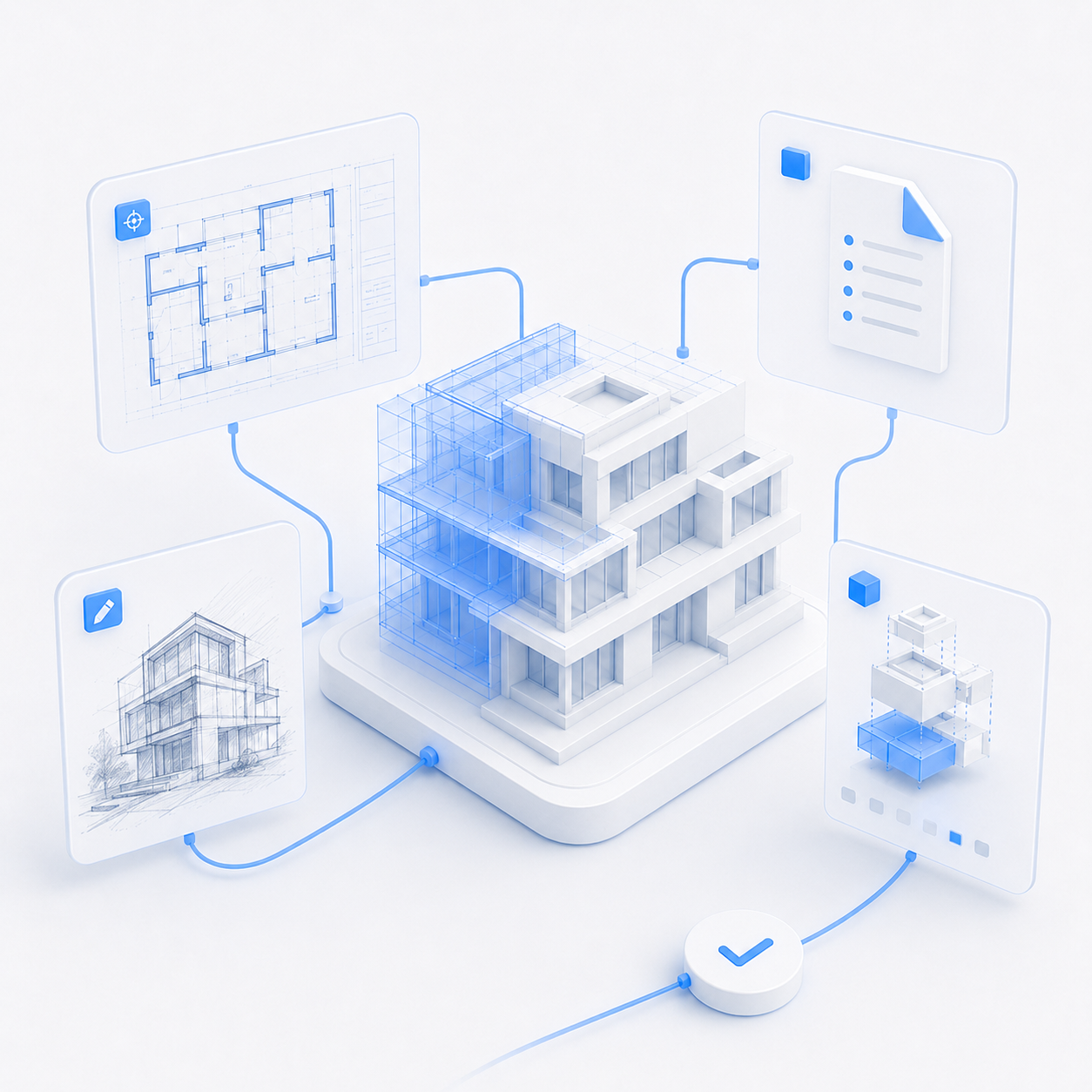
Why a Traditional Land Listing Is Not Enough
Many landowners rely on a traditional listing approach when they want to sell land or attract investors. This usually means presenting the location, the size of the plot, and perhaps a few basic details or general images. While this approach may be sufficient in some simple cases, it is often not enough when the goal is to position the land as a real investment opportunity that deserves serious investor attention. A traditional listing presents the land as a static asset, but it does not explain the potential behind it. Investors are not only looking for land itself; they are looking for an opportunity they can understand and evaluate. When the information is limited and purely descriptive, the investor is left to imagine what could actually be developed on the site and whether it is worth further consideration. In many cases, this lack of clarity leads to lost interest from the very beginning. The main weakness of a traditional presentation is that it focuses on raw information rather than potential value. Mentioning only the area and location does not answer the key questions investors ask, such as: What is the best use for this land? Is it suitable for a residential project, a commercial development, or something mixed-use? What kind of project could realistically emerge here? And how might the land look after development? These are the questions that separate an ordinary listing from a structured investment opportunity. This is why a preliminary study and an initial architectural concept are so important. When there is an early vision for how the land could be developed, it becomes possible to present it not only as a plot of land, but as a potential project with direction, value, and purpose. This makes the opportunity more convincing and helps investors form a clearer impression much faster. The presentation method itself also matters greatly. When land is presented through an organized platform, supported by visual material, preliminary studies, or early concept drawings, the opportunity becomes more attractive and more credible. This type of presentation does not simply make the land look better; it makes its possibilities easier to understand and its value easier to assess. In the end, the difference between a traditional listing and a professional presentation is the difference between showing land as it is and showing it as what it could become. Investors do not usually respond to empty land alone; they respond to the vision behind it. That is why presenting land in a more structured and thoughtful way can make a real difference in the level of interest, the quality of communication, and the likelihood of turning it into a genuine investment opportunity.
BIM services