How BIM Supports Professional Project Presentation for Investors
BIM, 3D and visual workflows that make complex projects easier to understand.
How BIM Supports Professional Project Presentation for Investors
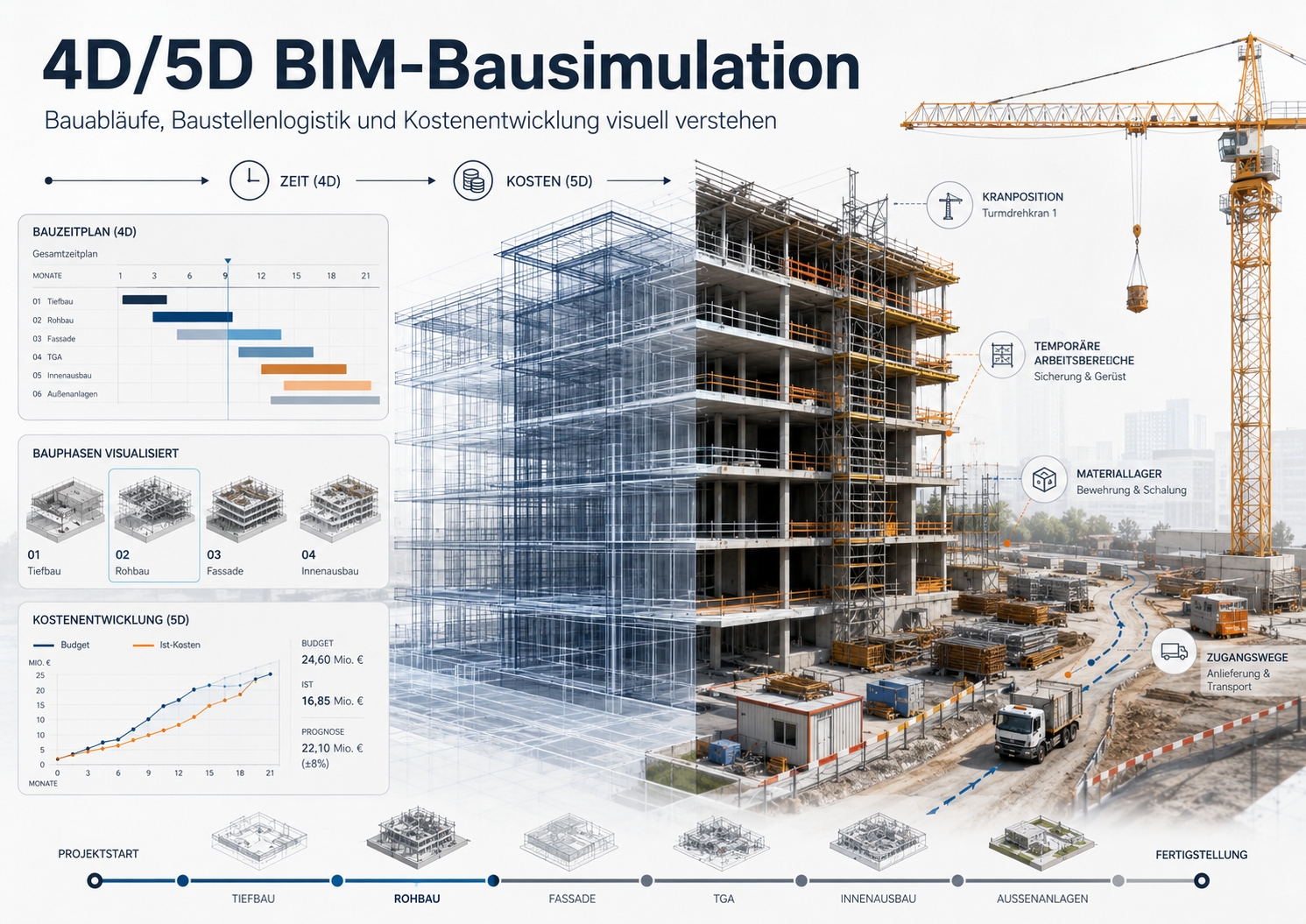
When BIM is mentioned, many people think of it only as a technical tool for architects, engineers, or the construction phase. In reality, its value goes far beyond coordination and execution. In addition to improving accuracy and information management, BIM can also become a powerful way to present projects to investors with more clarity, professionalism, and credibility. Investors do not only need an attractive idea. They need to understand the project clearly. They want to see how the elements relate to one another, grasp the logic behind the design, and gain a more realistic picture than what traditional drawings or general descriptions can provide. This is where BIM becomes especially valuable, because it allows the project to be presented as an integrated model rich in information rather than as a collection of separate plans. One of BIM’s strongest contributions in this context is that it turns the project into something easier to understand. Instead of relying only on plans, facades, or isolated visuals, the project can be presented as a coherent whole that reveals massing, spatial relationships, functions, development phases, and in some cases even time and cost dimensions through 4D and 5D presentations. This gives investors the sense that the project has been properly studied rather than merely sketched as an idea. BIM also helps increase confidence. When a project is presented through an accurate and structured model, investors feel that there is a clear methodology behind the work. This confidence does not come only from visual quality, but from the impression that the project is based on connected information and logical design thinking. The clearer the presentation is, the easier it becomes to move from early interest to a more serious discussion. Another major advantage is that BIM helps simplify complex projects. Some developments are mixed-use or involve layers of detail that are difficult to explain through text or static images alone. In these cases, an information-rich model becomes an effective way to translate complexity into something understandable, allowing investors to grasp the real value of the opportunity more easily. When BIM is combined with strong digital presentation or a professional platform, its impact becomes even greater. The model is no longer only an internal design tool. It becomes a communication tool that helps tell the story of the project in a much more convincing way. This is where BIM shows its strategic value in the investment context: not only as a design method, but as a tool for explanation, presentation, and decision support. In the end, investors are not looking for technology for its own sake. They are looking for clarity, confidence, and the sense that the project is mature and well considered. If BIM can deliver those things more effectively, then it becomes an important part of attracting investor attention and showing that a project deserves serious consideration.
BIM services