Stalled Real Estate Projects Due to Funding Gaps: How Interactive Project Presentation Can Help Restart the Conversation
Concept, feasibility and presentation support for development and investment projects.
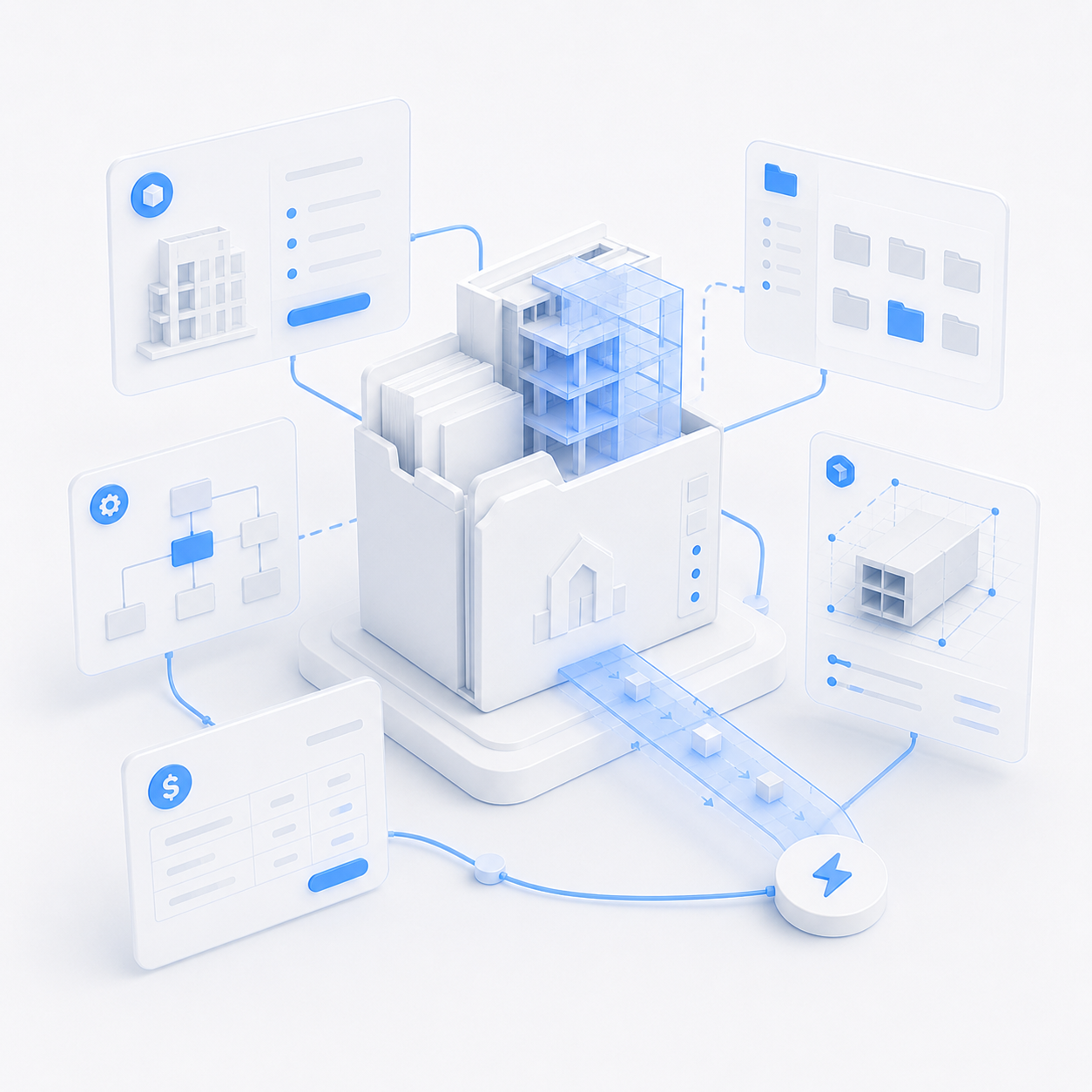
Stalled Real Estate Projects Due to Funding Gaps: How Interactive Project Presentation Can Help Restart the Conversation
Across many real estate markets, developers, project owners, and landowners face a difficult situation: a project has been planned, partially designed, or even partly built — but then stops because the financing is no longer sufficient. This can happen for many reasons. Construction costs may rise. Interest rates may change. A financing partner may withdraw. Market conditions may shift. A project owner may have underestimated the budget, or the project may have become harder to explain to potential partners and buyers. The result is often the same: a project that still has potential, but cannot move forward because it lacks clarity, trust, and access to suitable investors, buyers, or partners. For these situations, better presentation alone is not a complete solution. It cannot replace financing, legal due diligence, cost control, or project management. But it can help solve one important problem: making the project understandable enough to be seriously evaluated. What does an interactive project presentation mean in this context? For a stalled or underfinanced project, an interactive presentation should not only show a 3D building. It should allow buyers or investors to walk through the project online, select individual apartments or units, see what has already been built, understand what is still planned, check prices and availability, review documents and compare finishing options where applicable. This makes the difference between a vague unfinished project and a project that can be examined unit by unit, phase by phase and document by document. Why projects get stuck -A real estate project can stop before construction starts or during construction. Common reasons include: - construction costs rising faster than expected; - insufficient equity or debt financing; - changes in interest rates or lending conditions; - incomplete planning documents; - unclear project scope; - weak sales or pre-sales; - uncertainty about market demand; - missing or outdated cost estimates; - difficulty explaining the project to investors or buyers; - lack of a structured digital presentation. In Europe, the cost environment has been a major issue in recent years. Eurostat reports that construction producer prices in the EU increased significantly during the 2021–2023 period, with the annual rate peaking in 2022 before gradually slowing later. This cost pressure affected both residential and non-residential construction. At the same time, financing conditions changed across Europe as interest rates rose from the very low levels of the previous decade. The European Central Bank raised key interest rates sharply between 2022 and 2023 to respond to high inflation, which affected borrowing costs for households, companies, and real estate projects. In such an environment, projects that were calculated under older assumptions may suddenly become harder to complete, finance, or sell. The limits of traditional presentation When a project is incomplete or financially under pressure, it is often presented through: PDF exposés; static renderings; 2D drawings; spreadsheets; written descriptions; separate folders of documents; informal conversations with investors or buyers. These materials are useful, but they can also create friction. - A buyer may not understand the unit layout. - An investor may not see the project logic. - A financing partner may not understand the phasing. - A potential buyer may not trust the difference between what already exists and what is still planned. - A project owner may struggle to show why the remaining work is realistic. This is especially problematic for projects that are partially completed, technically complex, or still in early development. In those cases, the project needs more than a static file. It needs a structured way to show what exists, what is planned, what is missing, and what decisions are still open. What interactive project presentation can add An interactive 3D/BIM project presentation can help structure the information around the project. - Instead of presenting the project as disconnected files, it can combine: - the 3D/BIM model; - drawings and documents; - real images of the current condition; - project data; - individual units or spaces; - construction phases; - availability status; - optional price or cost information; - material or finishing options; - contact and inquiry functions. The goal is not to make the project look more impressive than it is. The goal is to make it easier to understand. A clear interactive presentation can help different stakeholders answer practical questions: - What has already been planned or built? - Which units or areas exist in the project? - Which parts are still open? - How is the project phased? - What documents are available? - What is the current status of each unit? - What could be sold, reserved, developed, or financed next? Showing existing and planned work separately [or stalled or partially completed projects, one of the most important points is transparency. A good project presentation should clearly distinguish between: - existing construction; - planned completion; - optional development scenarios; - required remaining work; - confirmed documents; - assumptions and estimates. This distinction matters because trust depends on clarity. If a project presentation mixes existing work with future visualizations without explanation, it can create unrealistic expectations. But when the current status and future vision are clearly separated, investors and buyers can evaluate the project more seriously. BIM can support this process by connecting geometry with information. However, the quality of the output depends on the quality of the model and the data behind it. A model made only for visual marketing is not the same as a structured BIM model suitable for quantity extraction, cost estimation, or 4D/5D simulation. Presenting units individually For residential and mixed-use projects, an interactive model can be structured so that individual apartments, offices, retail units, or other spaces can be selected separately. Each unit can include: -area; -floor; -orientation; -layout; -view; -price or price range; -availability status; -reservation status; -documents; -finishing options; - notes for buyers or investors. This is important because many real estate projects are not sold as one object. They are sold unit by unit. A structured unit-level presentation can support: - pre-sales; - phased sales; - investor discussions; - buyer comparison; - internal project review; - marketing coordination. For a potential buyer, this can reduce confusion. For a project owner, it can make the sales process more organized. For the project owner, unit-level presentation can also support staged sales. Instead of presenting the entire project as one large unfinished asset, the owner can show each apartment or unit separately, with its own data, price, availability, plan and status. This can make the discussion with buyers more concrete and reduce the need for repeated explanations. Supporting pre-sales without hiding risk Pre-sales can help finance a project, but they must be handled carefully. A digital presentation should not create false security. Buyers and investors still need: - legal review; - ownership verification; - planning and permit checks; - independent technical advice; - contract review; - payment schedules linked to progress; - realistic delivery timelines. An interactive presentation can support these steps by making information easier to access and compare. It cannot replace them. This distinction is essential. A platform should improve transparency, not create the illusion that risk has disappeared. Reaching investors and buyers beyond the local network Many projects remain invisible because they are only known through personal networks, local brokers, or limited advertising. A digital platform can make a project easier to share with: investors; buyers; project partners; family offices; diaspora communities; financing partners; consultants; internal decision-makers. For cross-border investors, the first step is often not buying immediately. It is understanding whether a project is worth further investigation. An interactive presentation can serve this early evaluation stage. It gives the project a clearer digital presence and helps interested parties decide whether to ask for more documents, arrange a meeting, or visit the site. A realistic workflow A practical workflow can look like this: Step 1: Collect and review the available material This may include: drawings; CAD files; BIM files; permits; photos; project descriptions; cost assumptions; unit lists; construction status information. Step 2: Create or prepare the model If a BIM or 3D model already exists, it can be prepared for interactive use. If no model exists, a suitable presentation model or BIM model can be created from drawings, PDFs, CAD files, sketches, or project information. The level of detail should match the purpose. A model for investor presentation does not necessarily need the same detail as a model for execution planning. Step 3: Structure the project The project can be organized into: existing and planned parts; phases; units; documents; availability status; optional scenarios; cost or price-related information, where appropriate. Step 4: Publish the interactive presentation The project can then be published through a browser-based link that allows stakeholders to explore the project, review information, compare units, and contact the project owner or representative. Step 5: Keep the project updated For a project that is still moving forward, updates are important. Progress photos, availability status, documents, and unit information should be kept current. An outdated presentation can damage trust. Where Benatrix can support Benatrix is a marketplace for real estate and investment projects presented through interactive 3D/BIM environments. If a project already has a BIM or 3D model, Benatrix can prepare and publish it as an interactive presentation. If no suitable model exists, the required BIM or 3D model can be created based on available drawings, CAD files, PDFs, sketches, or project information. If the project is still only an idea, land, or incomplete material, architectural concepts, planning drawings, areas, and presentation material can also be prepared. Depending on the project, the interactive environment can include: unit-level selection; prices or price ranges per unit; availability status; documents and drawings; finishing or material options; 4D/5D information; scenario comparisons; custom interactive project environments; AI assistants that answer questions based on the project’s own information. This can be useful not only for completed projects, but also for projects that need to be explained before financing, sales, partnership discussions, or further development. What Benatrix does not replace It is important to be precise. Benatrix does not replace: legal due diligence; financial feasibility analysis; bank financing; independent valuation; technical inspection; contracts; permits; professional project management. It supports presentation, structure, visibility, and communication. For stalled or underfinanced projects, this can be valuable — but only if the project itself has a realistic path forward. Conclusion A stalled real estate project is rarely stopped because of presentation alone. Usually, the reasons are financial, technical, legal, or market-related. But presentation can still matter. If a project cannot be understood, it is difficult to evaluate. If it cannot be evaluated, it is difficult to finance or sell. If it cannot be presented transparently, trust remains weak. Interactive 3D/BIM presentation can help turn scattered project information into a structured digital experience. It can show what exists, what is planned, which units are available, what documents support the project, and how interested parties can take the next step. It is not a miracle solution. But for certain stalled, early-stage, or under-presented real estate projects, it can be the missing communication layer that makes serious discussions possible again.
Marketplace