4D and 5D BIM: Schedule and Cost in the Building Model
BIM, 3D and visual workflows that make complex projects easier to understand.
4D and 5D BIM: When a Building Model Becomes a Planning and Cost Tool
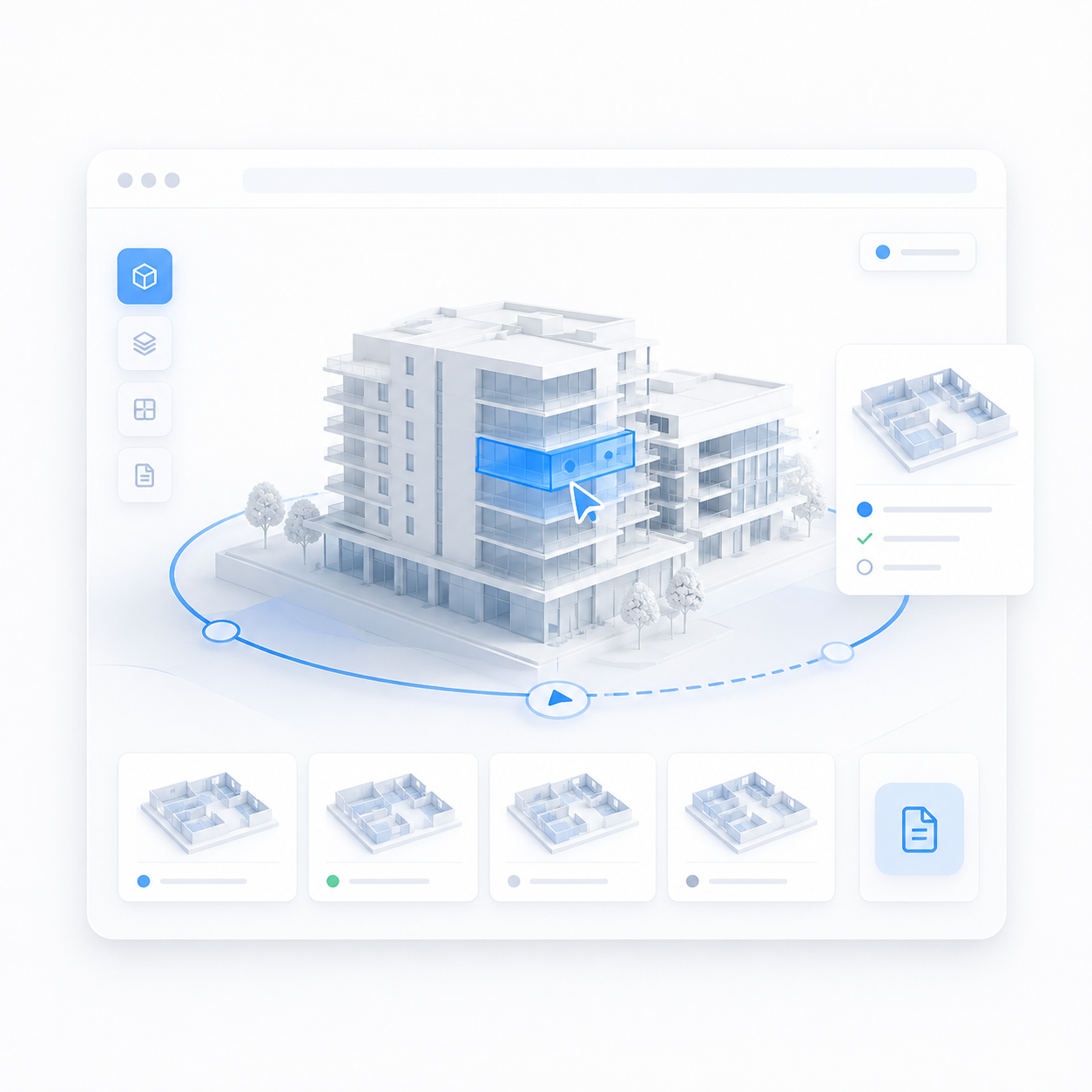
Building Information Modeling is often associated with 3D geometry: walls, slabs, rooms, windows, and technical elements represented in a digital model. But the real value of BIM does not stop at visualizing a building. When time and cost data are added to the model, BIM becomes a stronger tool for planning, communication, and project control. This is where 4D BIM and 5D BIM become important. What is 4D BIM? 4D BIM connects the 3D model with time. In practical terms, construction activities are linked to model elements, allowing the project team to visualize how the building is expected to be constructed over time. Instead of looking only at a Gantt chart or a static construction schedule, stakeholders can see the construction sequence visually: which parts are built first, how phases overlap, where access or logistics may become difficult, and how the site changes during the project. A systematic review of 4D BIM benefits found that the most frequently cited advantages include improved visualization, better communication and coordination between stakeholders, improved construction scheduling, and stronger progress monitoring. What can 4D BIM be used for? 4D BIM can be useful in several real project situations: - explaining construction phases to owners, investors, and non-technical stakeholders; - checking whether the planned sequence is realistic; - identifying potential conflicts in site logistics; - comparing different construction scenarios; - improving communication between design, construction, and management teams; - presenting complex project timelines in a way that is easier to understand. The key point is that 4D BIM is not just an animation. A useful 4D model should be connected to a real construction logic. If the schedule is unrealistic, the 4D simulation will only make an unrealistic plan look visually attractive. What is 5D BIM? 5D BIM connects the 3D model with cost information. It typically uses model quantities, cost data, and project structure to support cost estimation, cost comparison, and budget-related decision-making. In simple terms, 5D BIM helps answer questions such as: -How much material is required? -How does a design change affect quantities? -How does a change in scope affect the estimated cost? -Which option is more expensive and why? -How can cost information be linked to construction phases? Industry explanations of BIM dimensions commonly define 4D as the addition of time and construction scheduling, while 5D adds cost data to the model. From BIM data to virtual apartments and cost scenarios In real estate projects, 4D and 5D BIM become more useful when they are connected to the parts people actually need to evaluate. A buyer may select a virtual apartment, see its floor, area, orientation and availability, then compare how different finishing options affect the estimated price. A developer may use the same model to explain construction phases, expected delivery stages and cost assumptions in a clearer way. This makes the model more than a technical file. It becomes a practical decision interface: one view for geometry, timing, cost assumptions, unit information and project documents. What can 5D BIM be used for? 5D BIM can support: - quantity takeoff from model elements; - preliminary cost estimation; - comparison between design alternatives; - cost impact analysis when the model changes; - linking cost information to project phases; clearer communication between designers, owners, contractors, and investors. However, 5D BIM is only as reliable as the model, classification, quantity structure, and cost database behind it. A model that was created only for visualization is usually not enough for serious cost analysis. The elements must be modeled, named, classified, and structured in a way that supports quantity extraction and cost logic. 4D and 5D BIM are not automatic One common misunderstanding is that a BIM model automatically creates reliable 4D and 5D outputs. It does not. For 4D BIM, the model must be connected to a meaningful construction schedule. For 5D BIM, the model must contain usable elements, quantities, classifications, and cost assumptions. This means that 4D and 5D BIM require planning, structure, and project-specific decisions. They are not simply software features. They are workflows. Why 4D and 5D BIM matter for real estate and investment projects For real estate and investment projects, 4D and 5D BIM can be valuable before construction starts. They can help make a project more understandable for people who need to evaluate it but may not be directly involved in the design process. A developer, investor, project owner, or partner may not want to read technical drawings or detailed schedules. But they may need to understand: -how the project will be developed; - which phase comes first; - what the main construction logic is; - how design choices affect cost; - how different scenarios compare; - where major risks or dependencies may appear. In this context, 4D and 5D BIM can support better project communication, especially when combined with a clear visual presentation. The role of interactive project presentations A BIM model, a construction schedule, and a cost structure can be difficult to understand if they remain separated in different files. An interactive presentation can help bring these elements together. For example, a project presentation can show: - the 3D/BIM model; - the construction phases; - the main project data; - drawings and documents; - cost-related assumptions; - different development scenarios; - explanatory notes or guided views. This is one of the areas where Benatrix can support project owners and developers. When a BIM model exists, it can be prepared for interactive presentation. When no suitable model exists, the required BIM or 3D model can be created first. For early-stage projects, architectural studies and planning material can also be prepared before the project is published as an interactive presentation. When should 4D and 5D BIM be used? 4D and 5D BIM are most useful when the project has enough complexity to justify them. They are especially relevant when: - the construction sequence is important; - the project has multiple phases; - logistics are difficult; - investors or partners need to understand the project clearly; - cost comparison between options is required; - design changes need to be evaluated against cost and time; the project needs a stronger presentation before financing, approval, or sales. For very small or simple projects, a full 4D/5D workflow may not be necessary. In such cases, a simpler 3D/BIM presentation may be enough. Conclusion 4D and 5D BIM add time and cost intelligence to the building model. Used correctly, they can improve communication, support planning, clarify project phases, and make cost-related decisions easier to discuss. But they should not be treated as decorative features. Their value depends on the quality of the model, the structure of the data, and the clarity of the project logic. For real estate and investment projects, 4D and 5D BIM can become especially useful when they are connected to an interactive presentation that helps investors, owners, partners, and decision-makers understand the project before it is built.
4D and 5D BIM: When a Building Model Becomes a Planning and Cost Tool
BIM services